Regulatory Viscosity Mandates and Real-World Engine Wear: U.S. Factory 0W20 vs. 5W30 in GM, Toyota, Pentastar, Duramax, Honda, Jeep, and Lexus Engines
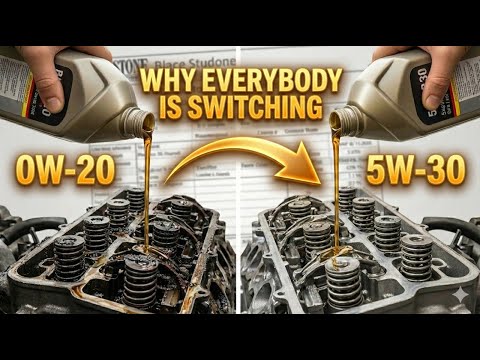
Recent shifts from factory-spec 0W20 to 5W30 motor oil are documented across GM, Toyota, Pentastar, Duramax, Lexus, Honda, and Jeep engines, challenging regulatory mandates. The transcript argues U.S. manufacturers transitioned to 0W20 for CAFE and EPA targets, not engine health, citing unchanged engine internals after global markets adopted thicker oil. Users switching to 5W30 report quieter operation, reduced tick, higher oil pressure, and improved longevity, especially in older/high-mileage engines. GM 5.3L V8s and Toyota’s V35A experience lifter/bearing wear linked to thin oil, with post-switch UOA (Blackstone, Pens Oil) showing reduced bearing metals and iron (e.g., 0 lead/tin, 4 PPM copper in Toyota, iron dropping from 59 to 26 PPM in Duramax).
Multiple creators detail their tests:
- Chevy Silverado owner moves to Mobil 1 5W30 after lifter fix; oil pressure rises from 12 to 24+ PSI at hot idle, ticking disappears.
- Toyota Tundra owner follows global manual specs, samples 0W20 and 5W30 for wear metals post engine replacement; MPG impact is minimal, and early oil changes (244 miles) flush break-in debris, with zero lead/tin and low copper.
- Jeep Grand Cherokee (Pentastar): Switch to Valvoline Restore & Protect 5W30, immediate noise reduction at 200K miles.
- Duramax LM2LZ0: UOAs reveal iron spikes and dilution on 0W20; Pens Oil 5W30 drops iron and keeps viscosity stable (11.0 centistokes).
- S&D Garage's Lexus GX460 and Honda: Each switches to 5W30 for better bearing film and longevity, echoing global specs despite U.S. mandates.
Manufacturers spec 0W20 in U.S. for "marginally better" fuel economy under CAFE/EPA, but owners and mechanics (e.g., Honda creator, 30 years' experience) advocate 5W30 for wear protection. Regional Toyota manuals recommend 5W30 even in Moscow/St. Petersburg, while Texas-built trucks allow multiple viscosities based on climate for Mexico, confirming hardware's compatibility.
Frequent oil changes are emphasized as more critical than viscosity alone: Turbo engines should follow intervals much shorter than OEM (first change at 244 miles, max 5K miles highway, 3K miles for daily stop/go), and even with 0W20, owners should prioritize interval over viscosity.
The science: Tribology International research supports 5W30 for stronger film (28% boost) and 40% drop in bearing wear over 50K miles in direct-injection V8s. Owners' empirical data and UOAs reinforce thicker oil for improved protection, reduced noise, and steadier oil pressure, while regulatory pressures drive factory oil choices.