The Housing Market Is Completely F*d
Graham Stephan
Graham: high Treasury yields could force housing prices lower
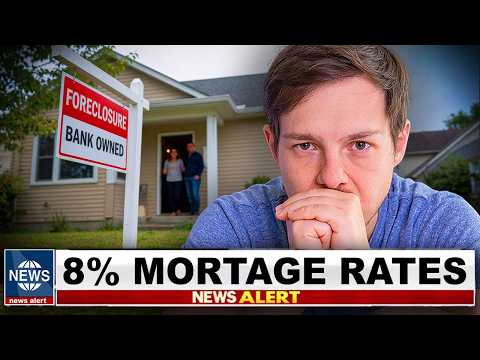
Graham argues that mortgage rates near 7.5% and long-term Treasury yields at levels unseen in more than 20 years are making homes harder to finance and rental properties less attractive. Bond prices and yields move in opposite directions: when investors will not buy bonds at existing prices, yields rise. He attributes the sell-off to three pressures: inflation, which he says has remained above 2.5% for 65 months; oil above $100 a barrel, with Bank of America warning of $150 and failed talks to open the Strait of Hormuz; and roughly $2 trillion in annual US deficits requiring more borrowing.
The first housing effect, he says, is fewer sales rather than an immediate nationwide price drop. Mortgage applications are at levels not seen since the early 1990s. Citing redfingers, he says there are 53% more sellers than buyers nationally and more than two sellers per buyer in Nashville, Miami, Houston, Orlando and Las Vegas. Nearly half of sellers in those areas offer concessions; 38% of home builders cut prices this month, and the average new-home price fell 8.8% year over year. National median prices remain up 2.1%, though he contrasts that with 3.4% inflation. At current rates, he estimates prices would have to fall about 14% to restore buyers’ monthly payments from earlier this year.
He identifies four broader risks: debt service, with refinancing at higher rates and each 1% increase on $32 trillion owed to the public adding $300 billion in interest; retirement accounts, after long-term Treasury funds fell more than 50% from their 2020 peak; stocks, because an expected $5.20 of S&P 500 earnings per $100 invested competes with $5.20 from Treasuries; and rentals, where his $500,000 example yields $26,000 a year in government debt versus $24,000 from a property before its hassles. He cites a venture consulting for real-estate investment falling by about half over four years.
In his better outcome, conditions gradually normalize. In the worse one, oil stays above $100, conflict escalates, the Federal Reserve raises rates and mortgages reach 8%. Graham expects sustained rates above 7% to build inventory and give buyers negotiating power, especially where construction and investor ownership are high—not necessarily cause a 2008-style national collapse, since today’s owners often have equity and low-rate mortgages. His advice: do not assume prices will keep rising; make offers that fit your situation.