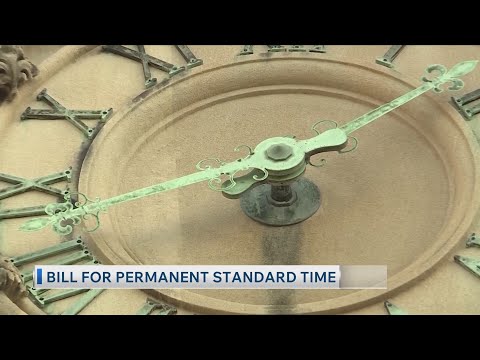
Bill For Permanent Standard Time - 8/11/2026
KCAU-TV Sioux City
Sunshine for Our Kids Act of 2026 would put the U.S. on permanent standard time
The transcript contrasts two congressional proposals: the 'Sunshine Protection Act', described as a bill that passed in the U.S. House and that would put America on year-round daylight saving time, and the 'Sunshine for Our Kids Act of 2026', which the speaker says would do the opposite by putting the U.S. on permanent standard time and eliminating the twice-yearly clock changes — 'no more springing forward or falling back'.
The policy trade-off is stated plainly. Permanent standard time avoids the later winter sunrises that have generated concerns about year-round daylight saving time, but it also shifts summer dawns earlier. The speaker gives a specific local example to illustrate that shift: in Sioux City the earliest sunrise under permanent standard time would be around 4.45 a.m. in mid-June, whereas the latest sunrise under permanent daylight saving time would be around 8.55 a.m. in late December and early January. Those two concrete times frame the seasonal contrast policymakers would choose between.
In short, the choice between the two bills is a choice about which seasonal sunrise pattern to lock in: later winter mornings under permanent daylight saving time, or earlier summer sunrises under permanent standard time. The transcript highlights the legislative names, the elimination of clock switching, and the Sioux City sunrise examples as the core evidentiary details supporting that trade-off.