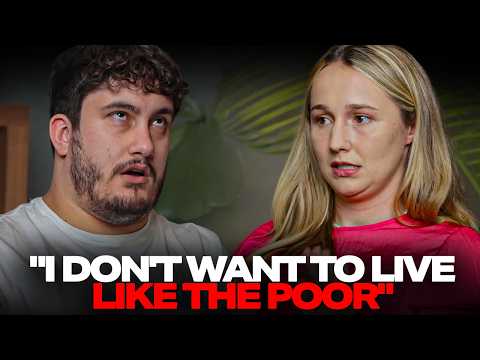
The Most Privileged Guest In Financial Audit History | Caleb Hammer Clips
Caleb Hammer - Clips
The Reality of Financial Privilege and Systemic Inequality: A Conversation Between Friends
The transcript features a heated dialogue between individuals discussing financial privilege, economic struggles, and the perceived fairness of capitalism. One participant expresses discomfort at being excluded from extravagant outings due to lack of funds, while another rebuffs the notion, saying 'You are not entitled to living their lifestyle.' This exchange uncovers tensions between those who have experienced financial hardship, including foreclosure, homelessness, and instability, versus others who have grown up with affluence ('privilege beyond privilege beyond privilege'), paid rent, and the ability to travel at whim.
The conversation shifts to systemic critique, lamenting that 'capitalism is bad' and wishing for a world where 'everybody had money and everybody was able to live comfortably.' However, the speaker is critiqued for lacking concrete proposals ('you can't even explain what a tax would look like'). Personal struggles are highlighted, with references to autism and reliance on social security by friends, but the argument returns to systemic issues and the difficulty of taxing the ultra-wealthy.
The topic moves to selling and buying online courses: one participant bought a $2,000 social media package from a friend with 5,000+ followers and corporate experience at Kendra Scott, receiving five strategy sessions and advice on content creation. This purchase is questioned, especially since the seller's credentials are limited and the buyer has no clear income. The phenomenon of unqualified individuals profiting from course sales ('lowest effort, lowest knowledge into something, then you sell it for multi thousands') is criticized, contrasted with Caleb Hammer’s own approach: collaborating with field experts, spending months developing 'budgeting and investing class,' and facing scrutiny over charging for such education.
The exchange underscores the emotional and structural divides between those with and without financial security, the inadequacies of hypothetical solutions, and the prevalence of questionable educational products.