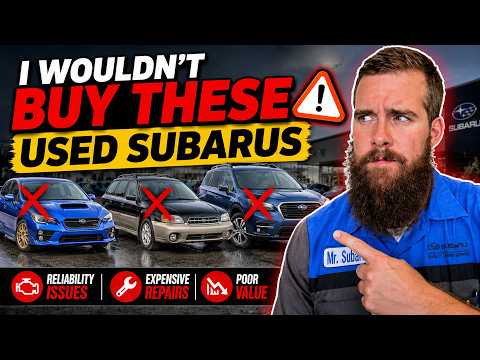
I Would NOT Buy These Subarus Used!
MrSubaru1387
Case-by-case Cautions When Buying a Used Subaru: Maintenance History, Models, and Key Issues
The speaker emphasizes that used Subaru purchases are highly individual, urging caution and scrutiny rather than reliance on generic advice. While Subarus are praised for reliability and performance in poor weather, specific models and scenarios warrant extra attention. Critical factors include maintenance history, service records, and how the vehicle was driven and modified.
-
Modified WRX/STI models are flagged because "modifications trump the normal services and maintenance," often leading to neglected essential upkeep like oil changes and timing belt replacements. Without proper tuning and maintenance, risks include engine (Ringland) failures and attempts to mask problems when selling. Always get a pre-purchase inspection for these vehicles.
-
Cheap, turbocharged EJ or F series cars (Forester XT, Legacy GT, Outback XT, Baja Turbo) are common in the used market, but for every well-maintained example, "there's probably five or six that are not long for the scrapyard." They suffer similar risks as modified WRX/STIs, including turbo and piston failures, making thorough engine compression/leak-down tests recommended before purchase.
-
Older EJ series 2.5L non-turbo Subarus without head gasket service records require scrutiny. Head gaskets are known to fail between 120,000 and 175,000 miles, and repairs can cost "several thousand dollars." Visual inspection methods are mentioned, but lack of documented replacement is a red flag.
-
Early FB series engines (2011–2014 Forester, 2012–2013 Impreza, 2013–2014 Crosstrek/Legacy/Outback) had oil consumption issues due to design flaws (low tension oil control rings, long service intervals). Subarus often remedied these with short block replacements under warranty, but absent service history means ongoing oil additions are likely, risking engine damage and emissions problems.
-
Early-year CVT-equipped Subarus (2010+ Outback and Legacy, early Forester/Crosstrek/Impreza) are vulnerable to torque converter and valve body solenoid failures. Repair bills range from "a couple thousand dollars" to as much as "$8–9,000 for replacement" (for Ascent CVT). Service history or dealer records are essential; failures typically occur between 120,000 and 200,000 miles.
-
Early Subaru Ascent models, successors to the Tribeca, had CVT and FA24 turbo engine issues, especially in 2019–2020. These are considered resolved in newer examples, but used Ascents require thorough service verification to avoid major transmission expenses.
-
Subarus with mismatched tires or no maintenance records are flagged due to risk of driveline damage and signs of broader neglect. Lack of documented care raises the likelihood of expensive repairs soon after purchase.
For all cases, the speaker insists on pre-purchase inspections and relationships with independent Subaru specialists. Anecdotal evidence shows that high-mileage Subarus (e.g., "2002 LL Bean I bought at 230,000 miles... 305,000 miles on it now", "2015 Outback Limited purchased with 213,000 miles... 276,000 miles on it now") perform well when properly maintained. The overarching recommendation is to seek vehicles with service records and matching tires, regardless of age or mileage, and to avoid blind purchases.